

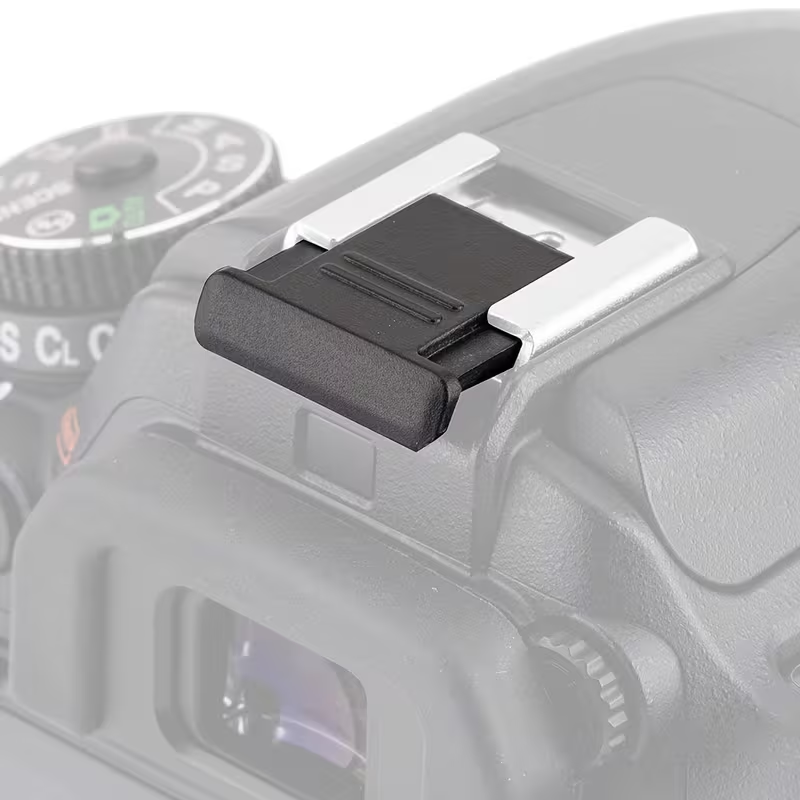
What a Hot Shoe Is and Why Protection Matters
The hot shoe is the standardized mounting bracket on the top of most DSLR, mirrorless, and many compact cameras. It provides both a mechanical connection and electrical contacts for triggering external flashes, wireless transmitters, microphones, video lights, or other accessories.
When the shoe is left uncovered:
- Dust, sand, moisture, and debris can accumulate on the electrical contacts, leading to unreliable flash triggering or communication failures.
- The thin metal rails (or “wings”) of the shoe can bend or deform if the camera is bumped, dropped, or pressed against something hard—repairs are often expensive.
- The open shoe can snag on clothing, camera straps, or bags.
- On some modern multi-function shoes (especially certain Canon RF and Sony Multi Interface designs), the contacts are more exposed or complex, increasing the value of a good cover.
Most cameras ship without a cover (or with a basic one that is easy to lose), which is why aftermarket hot shoe covers are extremely common.
Types and Designs
Hot shoe covers come in several styles:
| Type | Description | Pros | Cons | Typical Price Range |
|---|---|---|---|---|
| Basic plastic slide-on | Simple ABS or similar plastic piece that slides into the shoe | Cheap, lightweight, widely available in multi-packs | Can feel loose on some cameras; easy to lose | $3–$10 for 1–6 pieces |
| Exact-fit / brand-specific | Molded to match a particular manufacturer’s shoe (e.g., Sony Multi Interface, Canon Multi-Function Shoe, Nikon) | Secure fit, better protection of contacts | Less universal | $5–$20 |
| Full-coverage designs | Cover the top of the shoe more completely (sometimes with a slight “umbrella” or raised profile) | Better dust/moisture protection and impact resistance | Slightly bulkier | $7–$20 |
| Metal or premium | Aluminum, brass, or higher-end materials (e.g., Match Technical for Leica) | More durable, better aesthetics, less likely to crack | More expensive | $15–$30+ |
| Specialty | Versions with bubble levels, flags/logos, or locking mechanisms | Extra functionality or style | Niche | Varies |
Popular options include:
- Official covers from Nikon (BS-1), Sony (FA-SHC1M), and Canon (ER-SC2 / ER-SC3 series for newer multi-function shoes).
- Aftermarket brands such as JJC, Vello, SmallRig, K&F Concept, and Foto&Tech, which often sell multi-packs and exact replacements for popular models.
Compatibility Considerations
- Standard hot shoes (older Canon, Nikon, Fujifilm, Olympus, Panasonic, etc.) are largely interchangeable for basic covers.
- Sony Multi Interface Shoe and Canon Multi-Function Shoe (especially on newer RF cameras like the R5 Mark II, R6 Mark II, R3, R7, R8, R10, R50) have different contact layouts and sometimes require specific covers. Using the wrong one can result in a loose fit or incomplete protection.
- Some covers are designed not to interfere with pop-up flashes (where present), while others may block them.
- Cage users should check clearance—certain low-profile or full-coverage covers can interfere with camera cages.
Always verify the specific model listing against your camera (e.g., “for Sony A7 IV / A6700 / ZV-E10” or “replaces Canon ER-SC3”).
Practical Tips
- Buy extras. These tiny parts are easy to misplace. Multi-packs (2–6 pieces) are common and inexpensive.
- Fit is important. A cover that is too loose can fall off; one that is too tight can be hard to remove or risk damaging the shoe.
- Material and finish. ABS plastic is standard and sufficient for most users. Metal versions look nicer and feel more premium but are not necessary for protection.
- When to remove it. Simply slide it off before attaching any accessory. Store it in a small pouch, camera bag pocket, or with your lens caps so it doesn’t get lost.
- Edge cases. If you frequently shoot in dusty, sandy, or wet environments, a well-fitting cover is particularly worthwhile. For studio or controlled indoor use the benefit is smaller but still useful for long-term contact cleanliness.
Bottom Line
A hot shoe cover cap is one of the cheapest and simplest ways to protect an important (and somewhat delicate) part of your camera. While not essential for every photographer, it is widely regarded as good preventive maintenance—especially if you carry your camera without a flash attached most of the time. Official brand covers and well-reviewed aftermarket options from JJC, Vello, and similar makers are the most practical choices for the majority of users.