
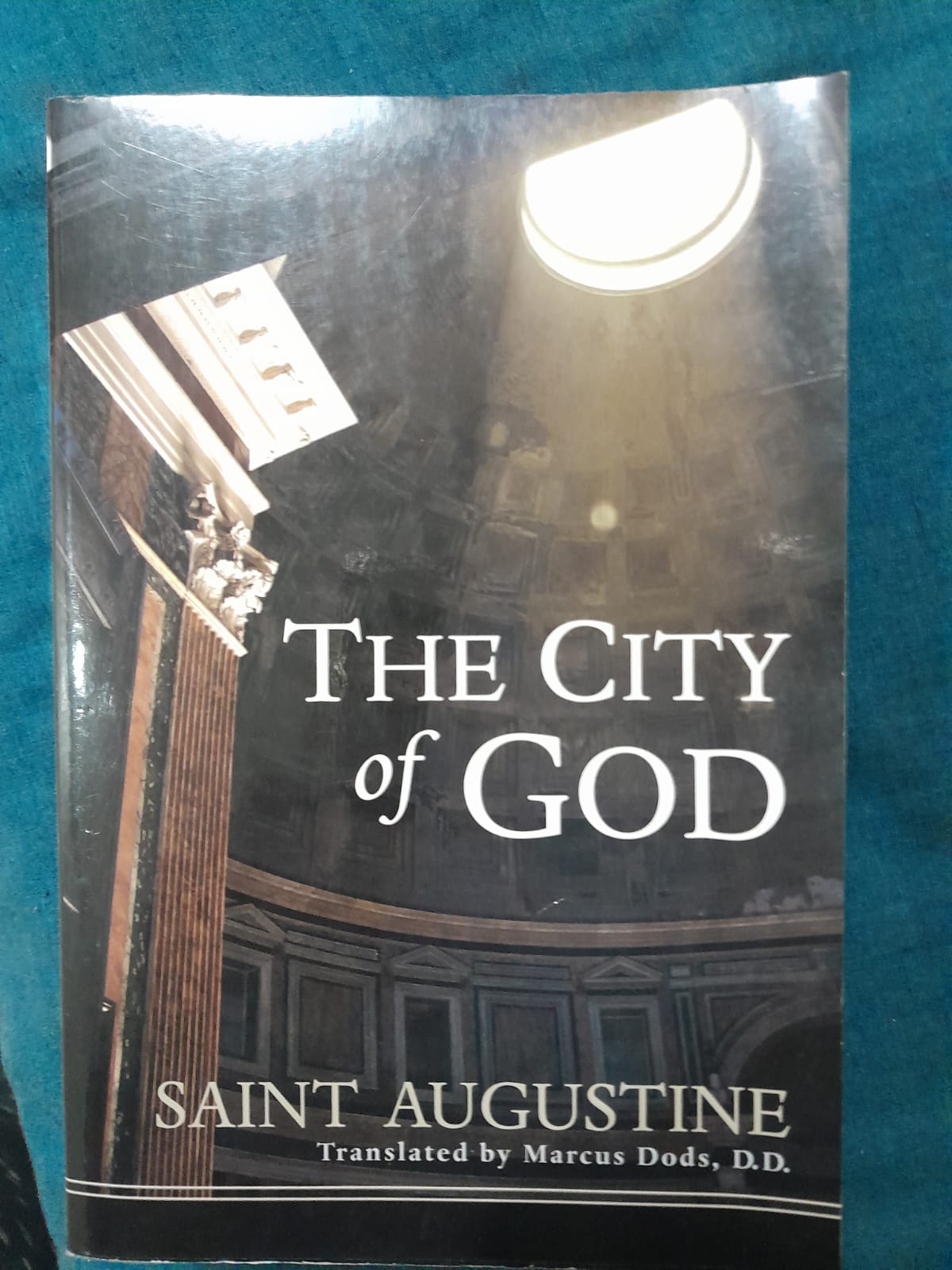
The City of God (De Civitate Dei contra Paganos) is one of the most important works of Saint Augustine of Hippo (354–430 AD), written between 413 and 426 AD. It is a monumental defense of Christianity and a profound philosophy of history.
Historical Context
The book was prompted by the sack of Rome by the Visigoths under Alaric in 410 AD. Many pagans blamed the rise of Christianity (and the abandonment of the old Roman gods) for Rome’s fall, claiming the traditional deities had protected the “Eternal City.” Augustine wrote to refute this charge, comfort Christians, and offer a broader theological vision.
Overall Structure
The work has 22 books, divided into two main parts:
- Books 1–10: A polemic against paganism (defensive/apologetic section).
- Books 11–22: A positive exposition of Christian theology and history through the lens of the “Two Cities.”
The Central Idea: The Two Cities
Augustine’s most famous contribution is the metaphor of the Two Cities:
- The City of God (Heavenly City): Composed of those who love God above all else (including self). Its members are pilgrims on earth, oriented toward eternal life with God.
- The City of Man (Earthly City): Composed of those who love self above all else (even to the point of contempt for God). It seeks happiness and peace through earthly power, pleasure, and domination.
These “cities” are not literal places or identified strictly with the Church and State. They are spiritual societies intermingled in this world until the final judgment. History is the story of their conflict, ultimately resolved by God.
Summary by Major Sections
Books 1–5: Pagan gods and earthly calamities Augustine argues that Christianity did not cause Rome’s fall. He shows that Rome and other empires suffered disasters (wars, plagues, invasions) long before Christianity, even when the pagan gods were fully worshipped. The old gods failed to protect moral virtue or material prosperity.
Books 6–10: Pagan philosophy and the afterlife He critiques Roman religion and Greek philosophy (especially Platonism). While acknowledging some truths in philosophers like Plato, he argues that only the true God (revealed in Christ) can grant eternal happiness. Pagan worship cannot secure the afterlife.
Books 11–14: Origins of the Two Cities Augustine turns to Scripture. He discusses Creation, the fall of the angels, the creation and fall of humanity (original sin), and how the two cities began with the division between those who love God and those who love self (e.g., Cain vs. Abel).
Books 15–18: Progress (or history) of the Two Cities He traces the parallel development of the two cities through biblical history (from the Flood, Abraham, the Hebrew nation, to the rise of earthly empires like Assyria, Rome, etc.) and shows how they coexist and conflict throughout time.
Books 19–22: The Ends (destinies) of the Two Cities This section covers the ultimate fates:
- The nature of true peace and happiness (only found in God).
- The Last Judgment.
- The resurrection of the body.
- Eternal punishment for the wicked.
- Eternal glory and the beatific vision for the saints in the City of God.
Key Themes
- Philosophy of History: Unlike pagan cyclical views, Augustine sees history as linear — from Creation to the Second Coming, guided by divine providence.
- Evil and Suffering: Misfortunes affect both good and bad people; true justice and peace belong to the next life.
- Grace and Free Will: Emphasis on original sin and the necessity of God’s grace.
- Critique of Empire: Earthly kingdoms, even great ones like Rome, are temporary and often marked by pride and violence. No earthly city is the ultimate good.
Significance
The City of God is not just a response to a crisis but a foundational text of Western Christian thought. It influenced medieval political theology, the understanding of Church and State, historiography, and figures from Thomas Aquinas to modern thinkers. It remains relevant for questions about faith, politics, secularism, and the meaning of history.
While very long and sometimes digressive (by design, as Augustine addresses many objections), it is both a rigorous defense of Christianity and a soaring vision of hope in the eternal City of God amid earthly turmoil.