

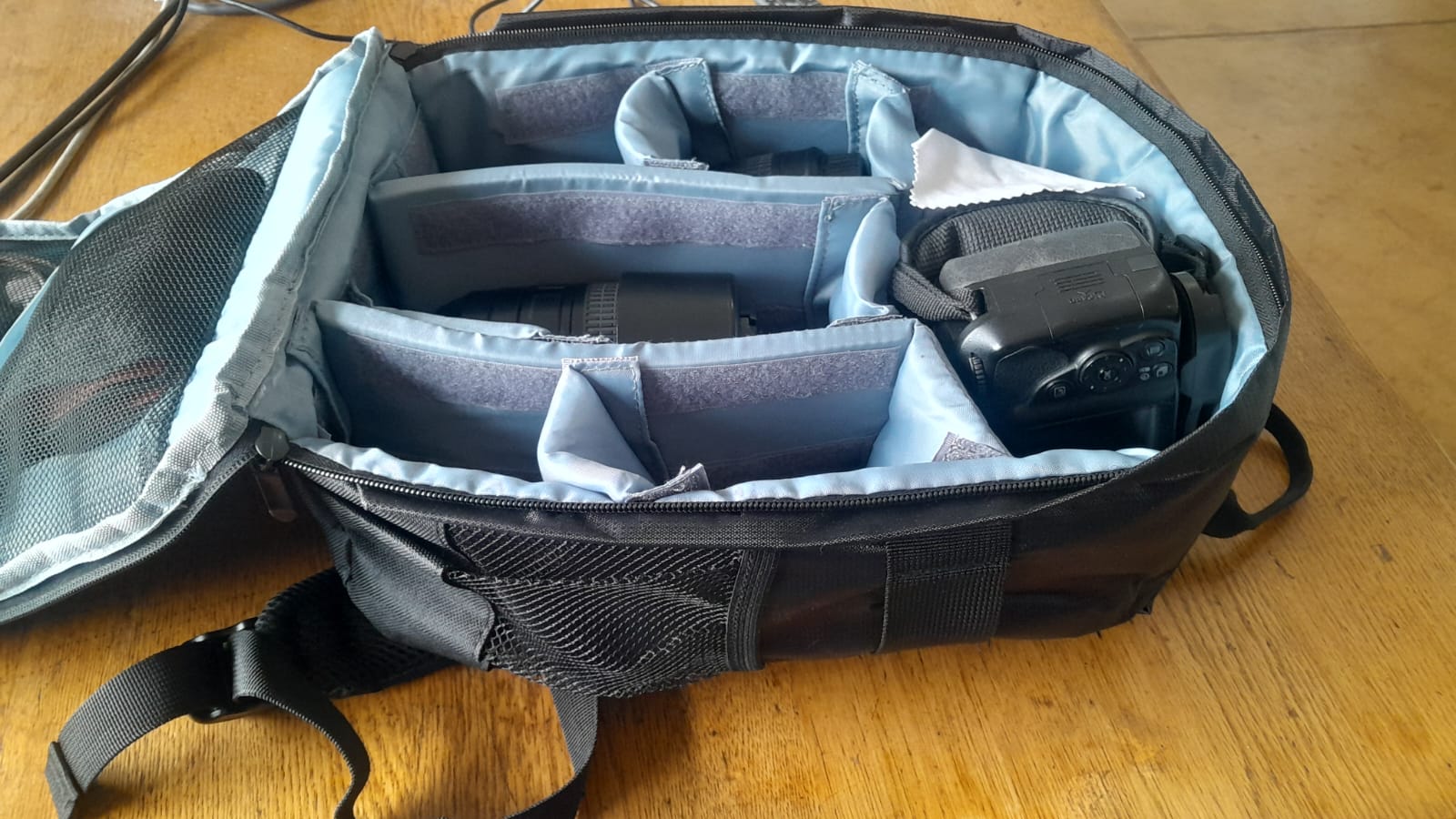
Core Design Principles and Key Features of Current Camera Backpacks
Contemporary designs prioritize three things: protection, access, and comfort.
- Protection systems: High-density foam padding lines the main camera compartment. Removable or reconfigurable padded dividers (usually Velcro-backed) let you create custom “cells” for a body + lens, extra lenses, a flash, and batteries. Many bags add a hard or semi-rigid base plate and reinforced corners. Weather resistance is common—water-repellent or fully waterproof fabrics (often with a rain cover that stows in a pocket), sealed zippers, and sometimes roll-top or storm-flap closures. Some premium models incorporate anti-theft features such as lockable zippers, slash-resistant materials, or RFID-blocking pockets.
- Access methods: Traditional top-loading designs still exist, but many newer bags offer rear-panel access (you swing the bag around and open the back panel against your body for security), side access for a camera with a lens already mounted, or a combination of front, side, and rear openings. Quick-grab side pockets or “holster” style side access let you pull a camera out without fully removing the pack.
- Carry and ergonomics: Padded, adjustable shoulder straps, a sternum strap, and a removable or stowable hip belt are standard on serious models. Air-mesh back panels improve ventilation. Weight distribution matters because camera gear is dense; a well-designed suspension system reduces fatigue on long walks or travel days. Some bags convert to a messenger-style sling or include a trolley sleeve that slips over rolling luggage handles.
- Capacity and organization: Interior volumes typically range from roughly 15–35 liters for dedicated camera packs (larger adventure or travel hybrids go higher). External features often include tripod straps or a dedicated tripod pocket, stretch mesh water-bottle pockets, and a laptop/tablet sleeve (usually 13–16 inches) in a separate compartment so the computer stays away from the camera gear. Accessory pockets hold memory cards, batteries, filters, cables, and cleaning cloths. Many designs keep the camera compartment completely separate from a day-pack style top or front pocket for clothes, snacks, or personal items.
Types and Evolving Styles
Camera backpacks fall into a few broad categories that have become more refined in recent years:
- Dedicated photo packs: Maximized padding and modular dividers, often with minimal non-camera space. Ideal for pure photography days.
- Hybrid photo/travel packs: Larger overall volume with a dedicated padded camera cube or section that can be removed, plus generous space for clothing and personal gear. Popular for trips where you need both camera kit and daily essentials.
- Sling or hybrid sling-backpacks: Wearable across the body for faster access; many convert between sling and dual-strap modes.
- Adventure / outdoor hybrids: More rugged materials, better weather sealing, and features suited to hiking (hydration compatibility, attachment points for poles or helmets).
- Minimalist or everyday carry (EDC) camera bags: Smaller profiles that look less “photographer” and more like regular urban backpacks, with enough padding for a body and one or two lenses.
Recent design trends emphasize modularity (removable camera cubes that can move between bags), lighter materials without sacrificing protection, better ventilation, and more discreet aesthetics so the bag does not immediately signal expensive gear. Some models now integrate better organization for mirrorless systems (which are often smaller and lighter than older DSLRs) and improved laptop integration as hybrid shooters carry both photo and video equipment.
Materials, Durability, and Practical Considerations
Exteriors commonly use ballistic nylon, Cordura, or polyester with durable water-repellent (DWR) coatings. Interiors use soft, non-abrasive fabrics (often the light blue or gray padding seen in your photo) that will not scratch lenses or camera bodies. Zippers are usually robust YKK or equivalent. Stitching, reinforced stress points, and quality hardware determine longevity.
When evaluating a bag, consider:
- Fit for your specific kit: Measure your largest lens and body combination. The adjustable dividers in the photo are typical and allow you to reconfigure as your gear changes.
- Access speed vs. security: Rear access is more secure in crowds; side or top access is faster in the field.
- Weight of the empty bag: A heavy pack plus gear becomes tiring quickly.
- Climate and use case: Full waterproofing matters in rain or for outdoor work; lighter weather resistance may suffice for city or studio use.
- Comfort over long periods: Try the bag loaded if possible. Hip belts and good load transfer make a large difference with heavier kits.
- Airline and travel practicality: Many packs are sized as personal-item or carry-on compliant; some include a rain cover and external attachment points useful on location.
Advantages, Limitations, and Trade-offs
Advantages include superior impact protection compared with ordinary backpacks, organized storage that reduces the chance of gear damage, hands-free carrying for hiking or walking shoots, and the ability to keep a camera ready while still having space for personal items.
Limitations include higher cost than generic packs, bulk when fully loaded, and the fact that even the best bag cannot completely eliminate the risk of theft or extreme impact. Very large kits may still require a rolling case or additional bags for long trips. Some highly modular systems add complexity and extra weight.
Edge cases worth noting: Mirrorless systems with smaller lenses can fit more gear into a smaller pack than older DSLR kits. Video shooters often need extra space for audio gear, batteries, and monitors. Photographers who also carry drones or lighting may prefer hybrid bags with expandable capacity or external attachment points. In very hot climates, ventilation becomes critical; in cold or wet environments, weather sealing and glove-friendly zippers matter more.