

Description
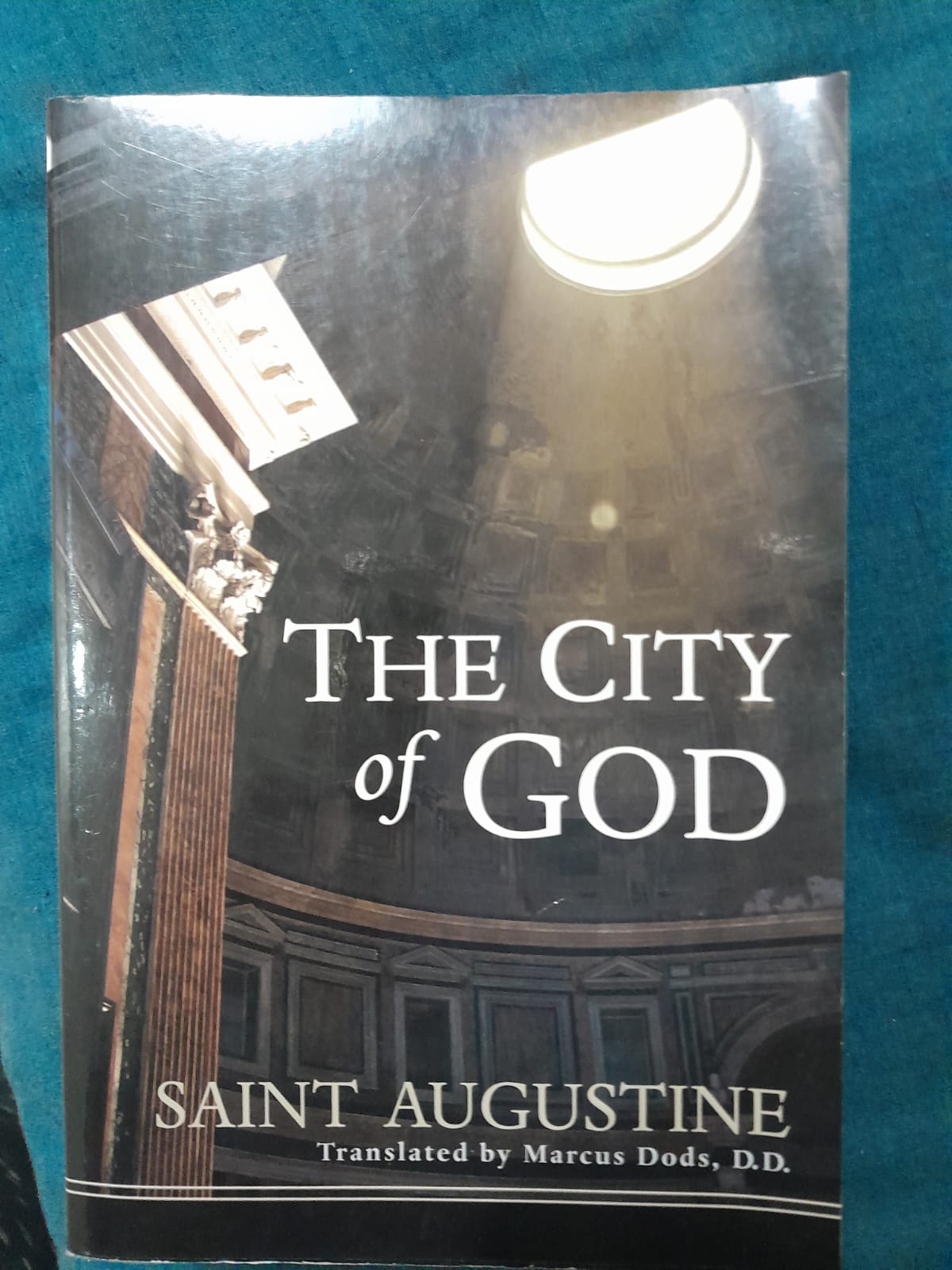
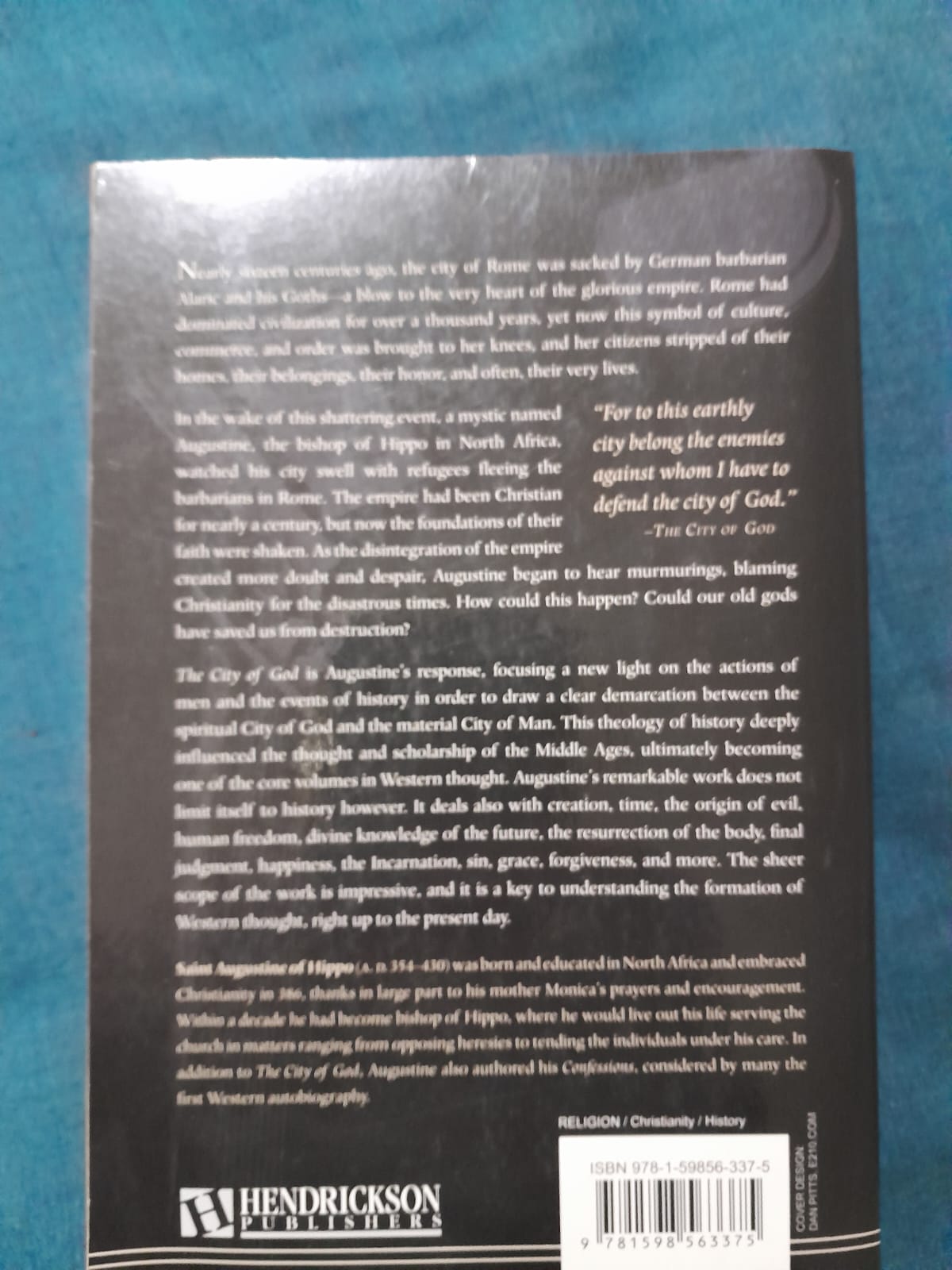
The City of God (Latin: De civitate Dei) . It was primarily composed to defend Christianity against claims that its rise caused the Sack of Rome in 410 AD.
Core Concepts and Structure
The work is divided into 22 books, split into two major sections:
- Books 1–10: Defense Against Paganism
-
- Augustine refutes the idea that pagan gods protected Rome, pointing out that many disasters occurred long before Christianity appeared.
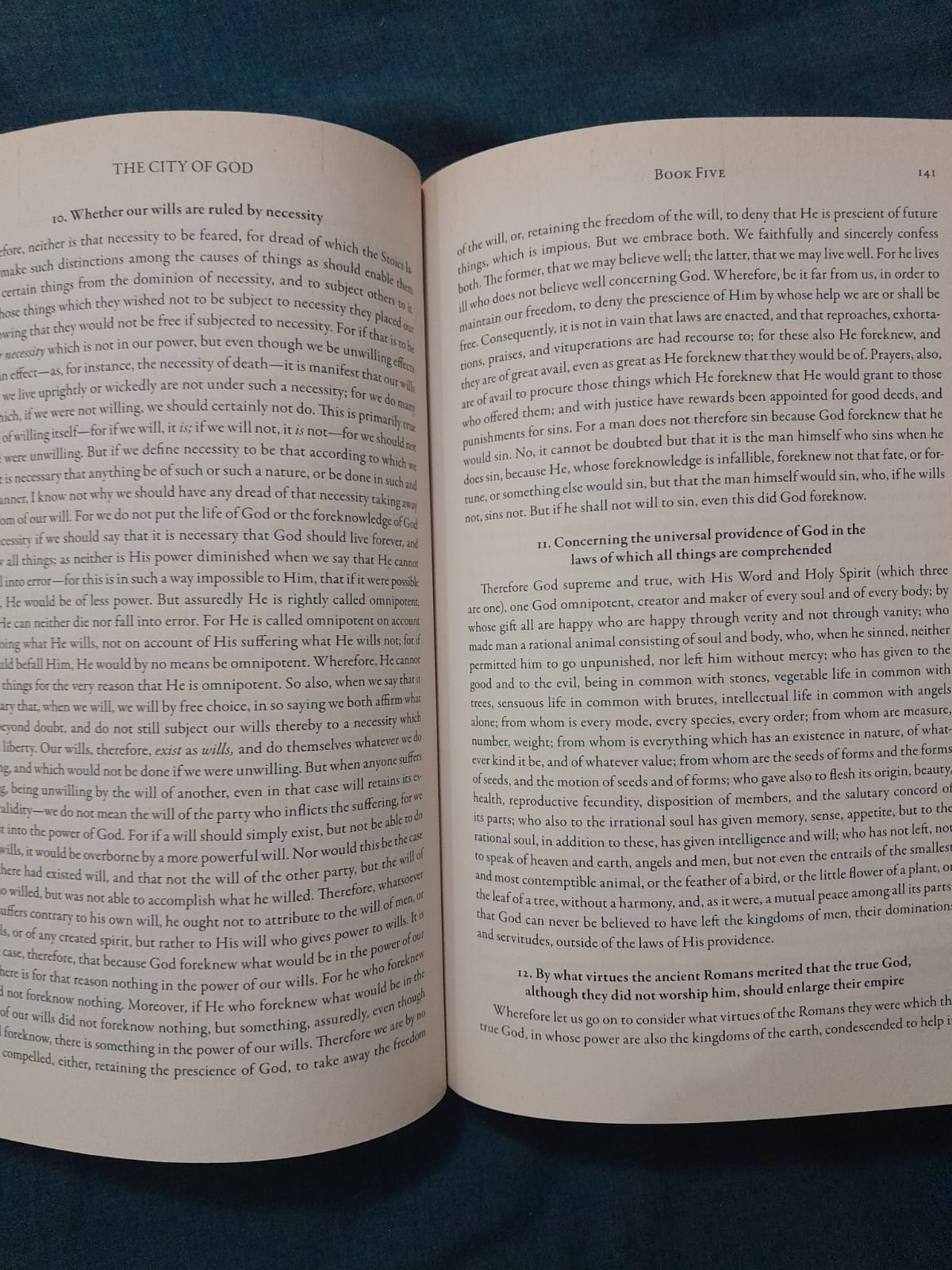
- He argues that Roman success was due to the one true God’s providence, not the pagan pantheon.
-
- Books 11–22: The Two Cities
- The City of God: Formed by the love of God “even to the contempt of self.” It is an eternal community of believers destined for salvation.
- The Earthly City (City of Man): Formed by self-love “even to the contempt of God.” It focuses on temporal power, pride, and earthly desires.
- Augustine views human history as a linear struggle between these two “cities,” which are currently intermingled but will be permanently separated at the Last Judgement
Reviews
There are no reviews yet.